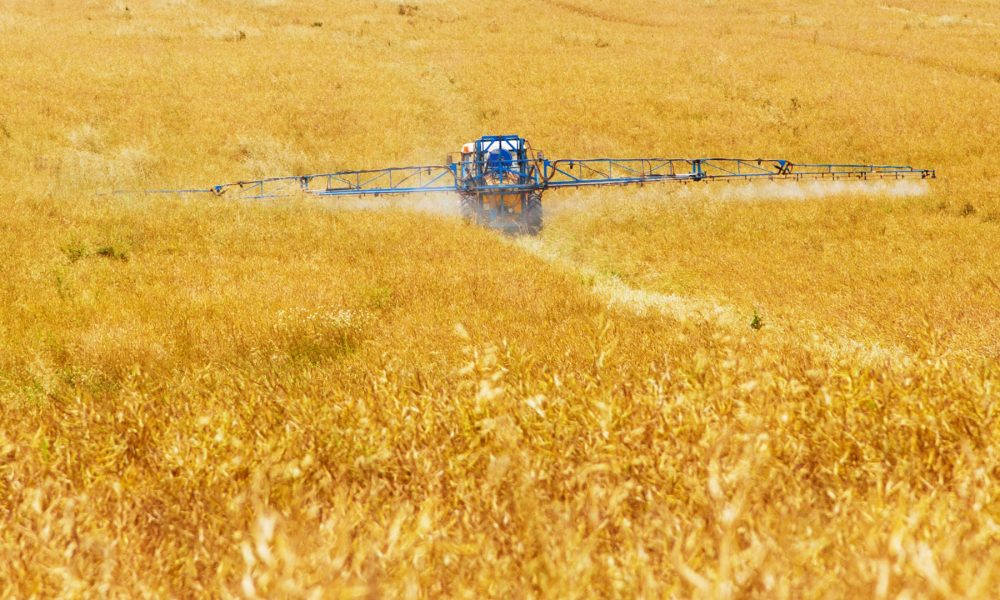
Research showing that our vegetables and meat are contaminated with microplastics, pesticides, and stubborn chemicals, that have become a ubiquitous part of the environment through soil and water pollution is significant. Research also shows that a portion of these contaminants that humans ingest in their food, sticks in their organs, and act as endocrine disrupters and potential causes of cancer and other diseases. Surely people have a right to avoid these physical perils.
The problem is that a society that does not live hand-to-mouth, must rely on the division of labor. Very few people can just till up their back yards and grow their own food. An urban backyard, is likely to have contaminated soil anyway, and many property owners agreed in their deeds to not engage in agriculture on their residential lots, so what can we do?
Agricultural practices and standards decided by a small number of decision-makers in government and the highly concentrated “Big Ag” sector, are at odds with the interest of everyday people to buy and eat less contaminated food. The incentives for decision makers at a few dominating companies, is to use as much harmful pesticide, chemically engineered products, and plastics, as they can to lower costs and improve profits.
Large agricultural conglomerate companies have bought up, or lease, much of the arable land in the United States, and they produce the majority of our food. As private companies, don’t they have a right to make the decisions at their companies?
They would, if these companies had achieved their market dominance in a free market. But the dizzying pace of mergers and economies of scale from producing at unprecedented volume, were not features of the free market. On the contrary, they were made possible only by the flooding of the equity market by central banks with liquidity and artificially low interest rates.
This manipulation of the money supply violated the rights of every person who uses the currencies involved, predominately, the US Dollar. Artificially low interest rates and central bank purchase of financial assets is an assault on every person who relies on the division of labor in a market. And regulation of agriculture, which dominating firms can easily afford, puts smaller producers at a disadvantage or may push them out of business altogether. The power of governments to define legal tender, and the power of central bankers to manipulate money supply and interest rates violate the rights of regular people to deal with each other on honest terms, which would prevent the sustained presence of monopolized markets, like Big Ag has done.
Many people incorrectly believe that industries naturally consolidate until there are just a few monopolizing producers, but this is not how an economy works when it is free of government manipulation. Markets free of manipulation naturally lead to the development of competing producers who each best satisfy a particular market segment, and markets invariably have segments representing different consumer desires. Only in the case of super-high-volume commodities like gasoline, do markets have just one driving segment that could lead to monopolistic concentration, but in these industries, profit margins would evolve to be be so narrow, that transportation cost would assure service by different regional firms. Again, Big Oil and the nationwide gas station chains are a product of artificially low interest rates and the abuse of consumers that unfree interest rate policy generates.
It is a historical anomaly that for several decades now, the goal of so many business people is to build a company up for a few years in order to sell out to a competitor or to a venture capital firm. This brief involvement in a business with the aim of making one’s fortune selling out to an industry-consolidator is a feature of a highly manipulated market, that cheats consumers.
So, no. The Frankenstein companies that produce most of our food do not have the right to make safety standards the same way an honestly run company, in an honest market, would. Small agricultural producers are