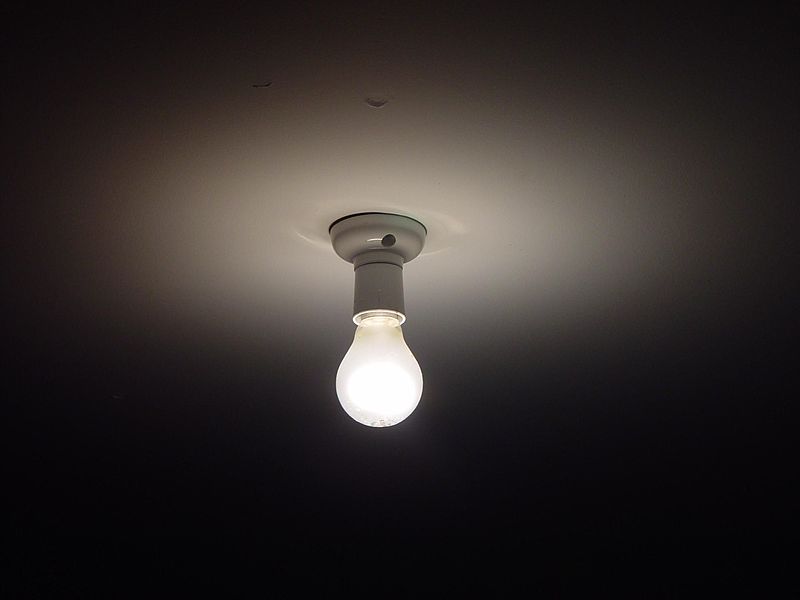
Under President Biden, the US Department of Energy passed a rule that forbids the sale and manufacture of common incandescent bulbs in the United States, starting on August 1, 2023.
For decades, the US federal government has been pushing the development of light bulbs that are more energy-efficient than traditional incandescents. Many consumers chose to be more energy-efficient. They purposely buy and use halogen bulbs, compact fluorescent lights, and LEDs where incandescents were used in the past.
Certainly, it is the right of consumers to spend their money on new technology that they consider better than the old standard product. The market process spontaneously makes technologies and whole classes of products obsolete this way all the time. So, why is it necessary to pass a bureaucratic rule that threatens people and companies with punishment if they continue to make or use products from the old technology?
The reason is that some people do not want to switch from incandescent bulbs to the current ubiquitous technology, LEDs. While the quality of light emitted by even the least expensive LEDs has improved a lot since they appeared on store shelves, some people still can detect a difference between light from an LED and light from an incandescent, and they prefer the incandescent light. Consumers may believe that their non-incandescent lights are causing poorer visibility, pain, or are triggering neurological reactions, like migraine.
Maybe someone has an antique lamp, which they want to function in its historical fashion. Why should people who have a preference for operating the traditional light bulb be denied the ability to do so?
And, why should stores and manufacturers be threatened with fines and closure for providing products that have been staples on store shelves for over a hundred years? Incandescent bulbs are cheaper, more reliable, and disposing of them is more environmentally friendly than LEDs or fluorescents. There are good reasons to want to use incandescent bulbs, and for manufacturers that are already tooled up to produce these bulbs that consumers are still demanding, it is an unjustifiable interference in private business plans for government to just ban the safe and proven product the manufacturer made capital outlays to produce. A waning market will eventually reduce the number of units sold to insignificant levels, if the technology is truly obsolete, and if the market is allowed to function.
These are the key questions to ask from a universal rights perspective. There is no justification for people who happen to work for the Department of Energy, for a Presidential administration, or for Congress, to arrogate to themselves the decision about what kind of light bulbs everybody else in the United States has to use. If rights and law should apply to everyone, then the decision of what kind of light bulb to use, should fall to everyone, not just to people who happen to work for government agencies, or even to elected officials. Bureaucrats and legislators would be right in fining or shutting down light manufacturers who are cheating consumers or harming them with abnormally and unexpectedly dangerous products, but that is because these are crimes universally. They are crimes no matter who commits them. Making incandescent light bulbs is no crime. The 100+ year tradition of doing so is a sign that producing light bulbs in a way that does not harm others with pollution or do other harms, is not a crime, and it should not be penalized by government.